Empathology: The Study of Surrogate Suffering
by 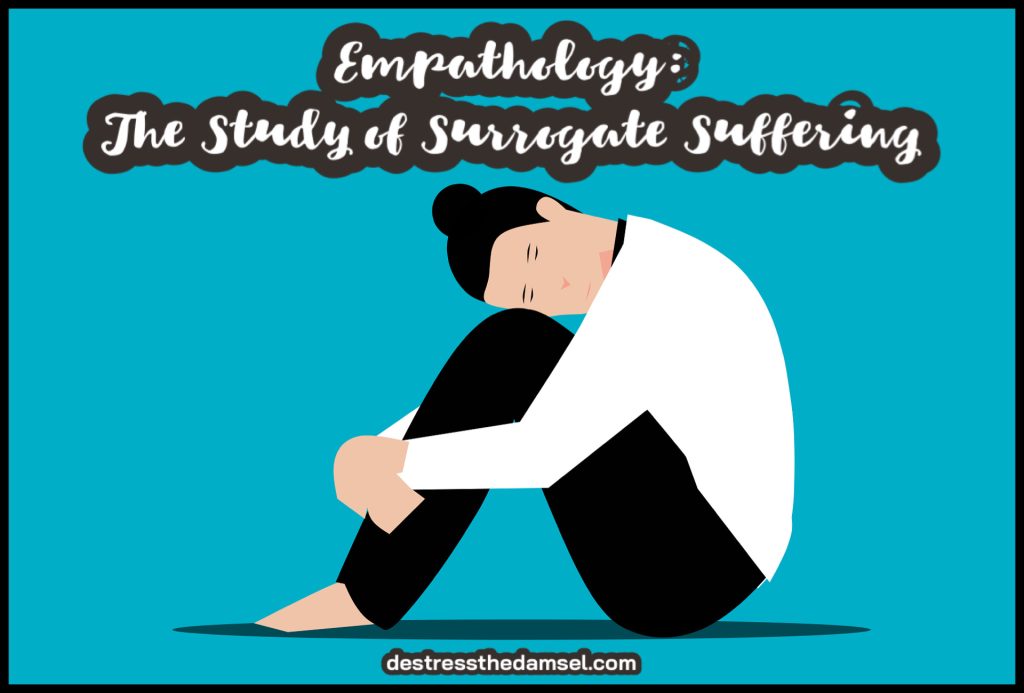
She was wearing a little blue tee shirt, and had the adorable, scraggly blonde hair of one far too busy enjoying childhood to bother with such trifles as hairbrushes. She would have been 3 or 4 years old…5 at the most. I never saw her smile. What first alerted me to her presence in the restaurant was her cry of anguish. My best guess is that she had relinquished her two shiny coins to the candy claw machine, but no candy had come out. “Play until you win”, the machine with the flashing lights had promised, yet it greedily devoured her coins and gave no return. The injustice was too much for her tiny heart. She ran off to find support…Mommy followed her to the machine. “I wanted candy,” she sobbed to her mother, “it didn’t give me anything!” (This was a sore lament, not a sour complaint.) She was incredulous. She was howling. She was utterly inconsolable. “See?!” she wailed, as she once more endeavored to command the obstinate machine. Fresh tears flowed over another failed attempt. She cried and cried until her mother took her away to calm down.
I didn’t know the child. Maybe she was being overdramatic. Maybe she was getting a little too loud. Maybe she was having what some would call a tantrum. I can’t say for sure…but I’d like to think I can tell the difference between an entitled brat and a heartbroken little girl. One thing I do know: her cries tore through my soul like the rending of heaven and earth. If I listen closely, I can still hear the sound of her precious voice. That vulnerable little girl made a deep impression on me that day. It might sound silly, but I went home that night and I wept. And I wept. And I wept. I never knew her name, but I’ll always remember her pain. Because I felt it.
If you are a bit of an empath—that is, one who keenly feels another’s emotions as if they were your own—you can probably relate to this experience. Now, let me set the record straight: there is a certain usage of the term “empath” associated with psychics, mediums, new-age religion, occultism, and the like. This is not the kind of “empath” I am speaking of, nor do I place any stock in such so-called powers. When I say empath, I am only referring to a person with hyper-empathy, or, in other words, someone whose sensitivity to the feelings of others is above-average.
Alfred Adler, a 19th century psychotherapist, put it this way:
❝Empathy is seeing with the eyes of another, listening with the ears of another, and feeling with the heart of another.❞
Some people have no empathy. Some people have empathy…and wish they didn’t. Empathy is a gift, but it can be quite painful and even crippling if not given healthy boundaries. One simply cannot carry the burdens of the whole world in their heart. There has to be a balance between holding space for the emotions of others, while also protecting your own peace of mind. So in this month’s article, Empathology: The Study of Surrogate Suffering, I am going to be sharing three distinctions between healthy and unhealthy empathy. My tenderhearted friend, I want you to keep feeling, without falling.
Firstly, healthy empathy means…
❝Search not a wound too deep lest thou make a new one.❞ – Thomas Fuller, M.D., Gnomologia (1732)
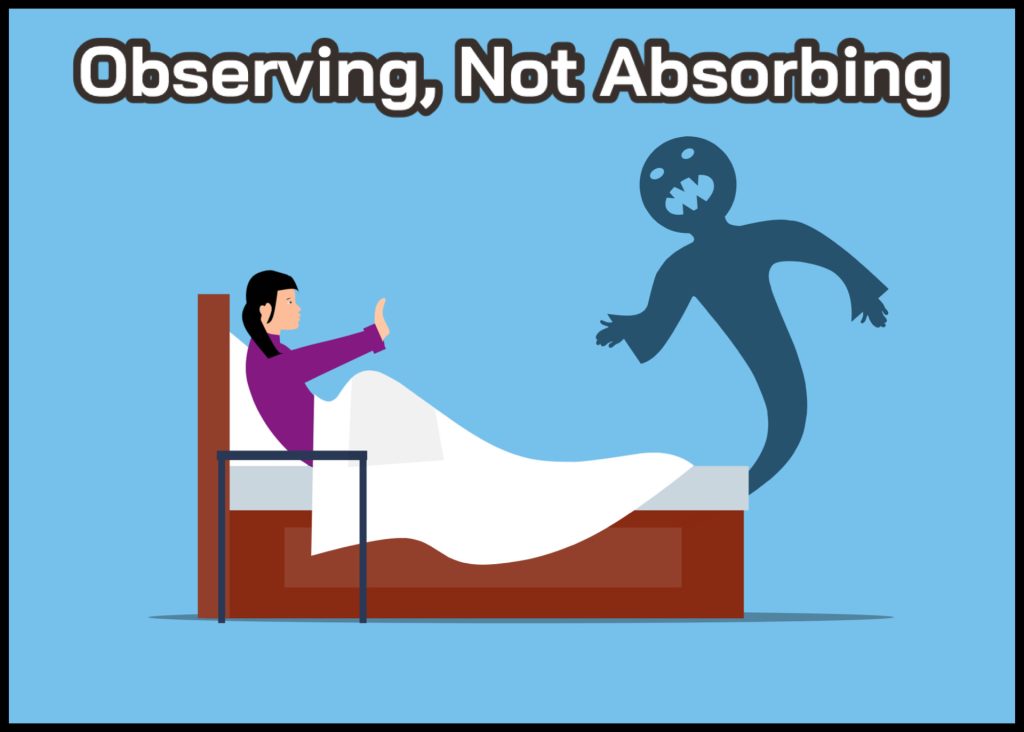
An apathetic woman will see someone’s pain and say to herself, “not me…not my problem.” An empathetic woman will see someone’s pain and say to herself, “me…my problem.” The first stance is clearly more mean spirited than the second – but I submit to you that neither stance is healthy. We must guard against caring too little; we must also guard against caring too much. But is it even possible to care too much? Hear me out: if you are internalizing someone else’s pain to the point that you are adopting it as your own, then yes. You have crossed the boundary from observing their suffering into absorbing their suffering. This is a grave mistake for any empath. For where there was originally only one wounded individual, now there are two. And instead of using your gift of empathy to act as a physician, you have inadvertently become another patient in need of healing.
When you absorb another person’s pain, the distinction between you and them grows fuzzy. Their grandfather died? It’s as if your own dear old grandpa departed this world. Their spouse left them? It’s as if your own heart is splitting from the betrayal. Their baby is in the NICU? It’s as if you are seeing your own little darling fighting for their life. This level of connection to another human being’s grief can take an enormous toll on your emotions and leave you reeling for days. And in this digital world where you can be exposed to human suffering around the clock, you can quite easily spend the rest of your life wallowing in miseries that are not your own. That is, unless you can learn to stop absorbing and start observing.
Healthy empathy is when you see someone hurting and you feel for them. Unhealthy empathy is when you see someone hurting and you feel it for them. (That little word “it” makes all the difference.) In the first scenario, your feelings lead you to be an emotional support for the vulnerable. In the second, your feelings lead you to be vulnerable and in need of emotional support. This latter response isn’t at all beneficial for the person you are empathizing with. Someone who is hurting needs you to see them, not be them. Whenever I spiral into hyper-empathy, I have to remind myself of this powerful truth: “this is not my burden to carry.” (Don’t think me to be insensitive; in our next point, we will discuss practical ways to help the burdened.) A seasoned empath will always hold a wee bit of distance between herself and the object of her empathy. She recognizes that everyone has personal trials they must go through…an unfortunate consequence of living in a fallen world. She feels genuine compassion, yet resists the urge to be consumed by grief. She places a limit on her emotional involvement, knowing that she must conserve some strength to face her own giants.
In Galatians 6:2, Paul tells us to “bear one another’s burdens“. A mere 3 verses later, in Galatians 6:5, Paul tells us that “each one will bear his own load“. I reckon this is neither accident nor contradiction. Paul is exhorting us to be balanced – to find the sweet spot between a deficit of emotion and a surplus. To be able to delineate between “my own load” and “another’s burden“. To stand back and observe whether we should assist with another’s burden, or if someone else should assist, or if the object of our empathy must carry it on their own. And this brings us to our next point.
Secondly, healthy empathy means…
❝For there is nothing heavier than compassion. Not even one’s own pain weighs so heavy as the pain one feels with someone, for someone, a pain intensified by the imagination and prolonged by a hundred echoes.❞ – Milan Kundera
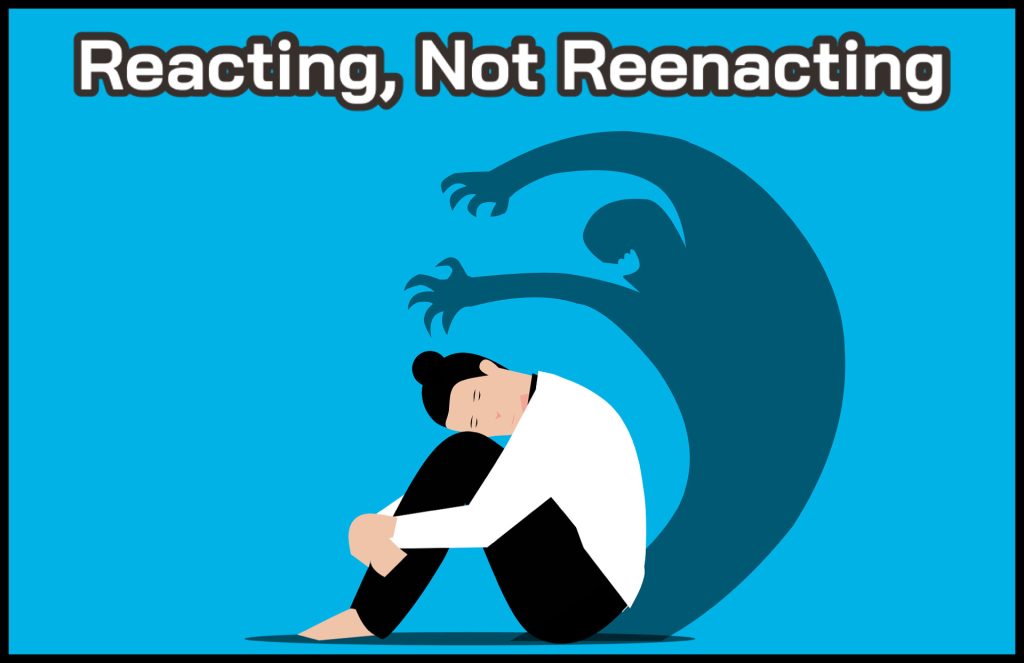
Empathy is a gift, insomuch as it compels us to relate with and provide comfort and care to the hurting. But oh, the weight of compassion without an outlet. If you don’t rise up and do something on account of your empathy, personal suffering is unavoidable. You will replay miserable scenes in your head again and again, making yourself sick with worry, fear, anxiety, and grief. This is called “empathic distress”, and it is the direct result of absorbing someone else’s pain. Empaths weren’t created to be surrogate sufferers. As we mentioned in our previous point, you falling apart won’t help the object of your empathy. They don’t need you reenacting their pain in your mind. They need you reacting to their pain in your movements!
There is no cure for empathic distress so effective as service. When you observe someone’s pain and react to it by helping them, it’s as if your empathy moves from your heart to your hands. Empathy is akin to energy…it wants to escape your body. It wants action. It wants to be set free. Harness that empathetic energy and use it for helping people. God gave you a tender heart so that you could be a blessing to others. When you are a witness to pain, ask yourself: “is this a burden I can help carry?” If the answer is yes, consider in what ways you can be of service. It might be offering a tender word of consolation, in person or in writing. Extending a listening ear, or providing a shoulder to cry on. Giving a hug, a squeeze on the arm, or a brush on the cheek. Cooking a savory meal, or baking a sweet treat. Scheduling a visit to the hospital or nursing home. Speaking a needed piece of advice, or instilling a boost of confidence. Lending a helping hand around the house or yard. Covering an expense, or making a donation. The list goes on, for there are numerous ways that you can show up for the burdened. Romans 12:15 exhorts us to “Rejoice with those who rejoice, and weep with those who weep“. Do you notice how it says “with“? Not “on behalf of“, but “with“. It’s an individual’s job to process their emotions; it’s our job to come alongside them and show compassion. Healthy empathy will move us to serve; unhealthy empathy will move us to suffer. If you go home at the end of the day and reenact someone else’s pain, dwell on someone else’s troubles, concentrate on someone else’s grief…it’s too much. Your emotions, in some twisted way, have become more about you, and less about them. We must control our empathy by looking outward, not inward. We must guide our intense feelings to fulfill their intended purpose: to travel out from our hearts and into our hands.
Now, there are some instances in which we –for some reason or another– simply cannot help carry another’s burden. In Romans 15:1, we are informed that “we who are strong ought to bear the weaknesses of those without strength.” I want to draw your attention to who ought to bear the weaknesses of those without strength. “We who are strong“, the scripture reads. Not everyone is strong, and certainly no one is strong in every area. Therefore, some burdens will be too heavy for us to help lift. In the same way that a woman may find herself too weak physically to help her husband carry a heavy piece of furniture, we may likewise find ourselves too weak (emotionally, intellectually, financially, spiritually, etc.) to help an individual who is struggling. The most helpful thing we can do in such a situation is to acknowledge and accept our inadequacy, directing the person to someone (or Someone) stronger than ourselves and thus more properly outfitted for the task at hand. And that’s what our next point is all about.
Thirdly, healthy empathy means…
❝A sympathetic person is placed in the dilemma of a swimmer among drowning men, who all catch at him, and if he gives so much as a leg or a finger, they will all drown him.❞ – Emerson, “Experience,” Essays: Second Series (1844)
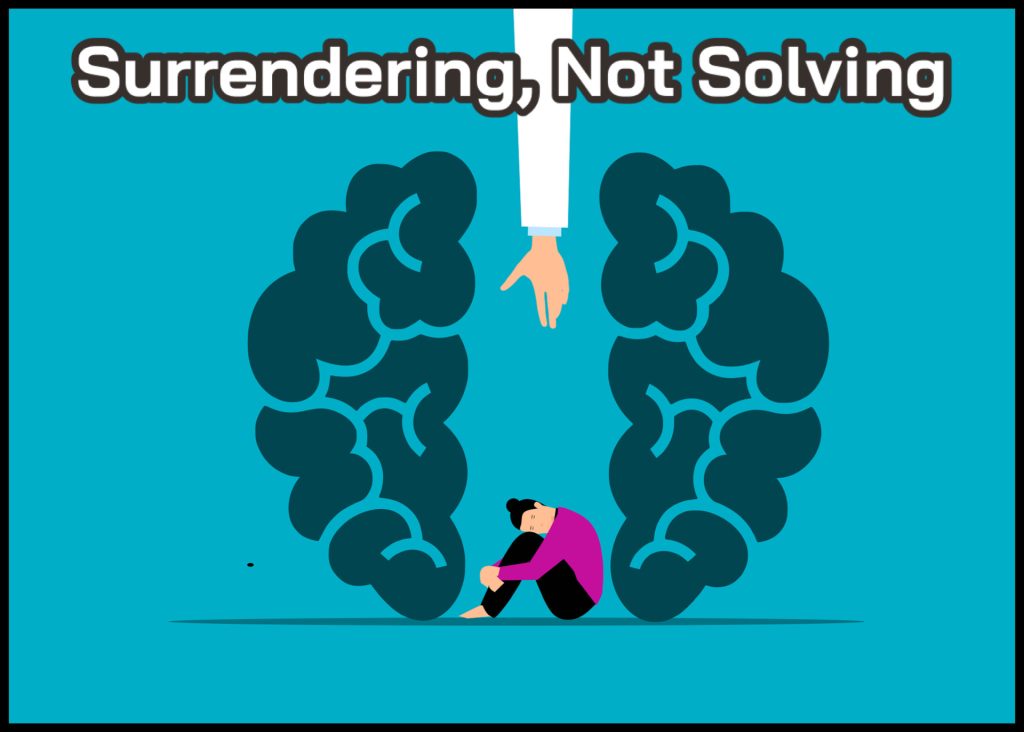
What can you do when any attempt to rescue the “drowning” would only drag you down to your death? What can you do when poor souls “catch at” your heartstrings, but you simply cannot save them? What can you do when you yearn for a solution, but there is none to be found? It’s times like these when the empath must learn the art of surrender…for not every problem can be solved. Not every hurt can be healed. Not every burden can be lifted. Not every broken thing can be fixed. At least, not by us! We must come to terms with the fact that we are not in control…God is. No matter how much empathy we experience for someone, we can find peace knowing that He sees and loves that person even MORE than we do.
If you find yourself unable to provide the relief you wish you could for a burdened individual, your first step should be to find someone else who might be of service. Perhaps someone who has more wisdom/maturity, time/energy, money/connections, etc. There is no shame in admitting when you are not the right person for a job. Far better for you to refer the object of your empathy to someone who can help properly, rather than for you to help poorly. People who endeavor to carry burdens that are too heavy for them end up dropping their side of the load, injuring themselves and their moving partner in the process. It is wise to let a stronger person step in and do the heavy lifting when a weight is beyond your ability to carry.
Now, to reiterate: there are some burdens that we can help carry, and there are some burdens that we can find someone else to help carry. There also remains one more variety: the burdens that an individual must carry alone. These burdens are often those that plague the heart and mind. (i.e. depression, anxiety, loss, betrayal, etc.) In such instances, we may be able to provide some comfort, but only God can provide the cure. The most powerful thing we can do for people with internal struggles is to intercede for them with prayer. I am reminded of an inspiring scene in The Lord of the Rings: The Return of the King (both in the book and the film), in which the character Samwise Gamgee finds himself at a loss on how to assist his friend and master, Frodo Baggins, with a burden that only Frodo can carry. Thinking outside the box, Samwise hoists Frodo over his shoulder and says this iconic line: “I can’t carry it for you…but I can carry you!” What a great reminder – even when we can’t lift the burden, we can always lift the burdened (read: in prayer). Healthy empathy is trusting God to make things right; unhealthy empathy is trying to fix everything by our own strength.
Take a few moments to read David’s example of surrender from 1 Samuel 12:15b-23:
“Then the Lord struck the child that Uriah’s widow bore to David, so that he was very sick. David therefore inquired of God for the child; and David fasted and went and lay all night on the ground. And the elders of his household stood beside him in order to raise him up from the ground, but he was unwilling and would not eat food with them. Then it happened on the seventh day that the child died. And the servants of David were afraid to tell him that the child was dead, for they said, ‘Behold, while the child was still alive, we spoke to him and he did not listen to our voice. How then can we tell him that the child is dead, since he might do himself harm!’ But when David saw that his servants were whispering together, David perceived that the child was dead; so David said to his servants, ‘Is the child dead?’ And they said, ‘He is dead.’ So David arose from the ground, washed, anointed himself, and changed his clothes; and he came into the house of the Lord and worshiped. Then he came to his own house, and when he requested, they set food before him and he ate. Then his servants said to him, ‘What is this thing that you have done? While the child was alive, you fasted and wept; but when the child died, you arose and ate food.’ And he said, ‘While the child was still alive, I fasted and wept; for I said, ‘Who knows, the Lord may be gracious to me, that the child may live.’ But now he has died; why should I fast? Can I bring him back again? I shall go to him, but he will not return to me.’“
David was overcome with empathy for his sick baby, but there was nothing in his own power he could do to save the child’s life. So David devoted himself to prayer and fasting, in hopes of garnering the Lord’s favor. Ultimately, God did allow the baby to perish, and David’s empathy appears to have died that same day. We, like David’s servants, may find ourselves a bit flabbergasted at David’s seemingly cavalier response to his baby’s death. But I would suggest that David had an exceedingly healthy sort of empathy – he understood that when you cannot solve it, you have to surrender it.
In conclusion…
Healthy empathy means observing, not absorbing. It means reacting, not reenacting. It means surrendering, not solving.
At times, being an empath can feel more like a curse than a gift. A sad song can wind it’s way into your psyche and put you into a funk. A sad book can touch your soul and leave you with tear-stained pages. A sad movie can play with your emotions and cause you to identify with a tormented character. A sad little girl at a candy machine can break your heart and leave you forever hoping that her life is filled with joy and love. But having the sensitive heart of an empath isn’t a bad thing…if you are careful to practice healthy empathy. Did you ever stop to consider that our Savior is the empath of all empaths? We all know John 11:35, the shortest verse in the Bible: “Jesus wept.” But why did He weep? Jesus’ emotional display came on the heels of His friend, Lazarus, dying. If you know the account, you know that Jesus resurrected Lazarus on the very same day that He wept over his death. Typically, people weep over a “goodbye“, not a “see you later“. I don’t think Jesus was weeping for Himself, nor was He weeping for Lazarus. No, I think that He was weeping out of empathy for Lazarus’ grieving loved ones. Let’s read John 11:35 in context, beginning with vs. 33-34:
When Jesus therefore saw her [Lazarus’ sister, Mary] weeping, and the Jews who came with her, also weeping, He was deeply moved in spirit and was troubled, and said, “Where have you laid him?” They said to Him, “Lord, come and see.” Jesus wept.
The King of Kings allowed Himself – for a brief moment in time – to feel someone else’s pain. Yes, I do believe Jesus was an empath. Scratch that – Jesus is an empath. He felt Mary’s pain. He felt the Jews’ pain. He feels the object of your empathy’s pain. He feels my pain. And he feels your pain.
For we do not have a high priest who cannot sympathize with our weaknesses… – Hebrews 4:15a
Jesus’ gift of empathy compelled Him to breathe new life into Lazarus. May our gift of empathy compel us to breathe life into others, also!
Tenderhearted friends, let’s keep feeling, without falling.
For God’s glory,
Mrs. Dustin Bolks
Chaste Bolks is a church of Christ preacher’s wife, living in Northwest Iowa. She began her monthly blog, Destress the Damsel, in January of 2014. Her favorite things include unlocking truths from God’s word, spending time with her husband, playing with her kitties, reading a quality book, watching a wholesome movie, mastering a retro video game, keeping house, and soaking up the sunshine. She is passionate about sharing Biblical Womanhood in the hopes that some woman, somewhere, will be better for it.

I knew three sisters,–all were sweet;
Wishful to wed was I,
And wondered which would mostly meet
The matrimonial tie.
I asked the first what fate would she
Wish joy of life to bring to her.
She answered: ‘I would like to be
A concert singer.’
I asked the second, for my mind
Was set on nuptial noosing,
Unto what lot was she inclined
If she could have the choosing?
Said she: ‘For woman I can see
No fortune finer,
Than to go in for Art and be
A dress designer.’
With heavy heart I asked the third
What was her life ambition;
A maiden she in look and word
Of modest disposition.
‘Alas, I dearly wish,’ said she,
‘My aims were deeper:
My highest hope it is to be
A good house-keeper.’
Which did I choose? Look at my home,–
The answer’s there;
As neat and sweet as honeycomb,
With children fair.
And so it humbly seems to me,
In common life,
A woman’s glory is to be
A good house-wife.
“Careers” by Robert William Service
Every ship must embark upon a “maiden voyage” (read: its first journey) in order to fulfill the purpose for which it was made. In like manner, every woman must embark upon a Maiden Voyage (read: her life’s journey) in order to fulfill the purpose for which she was made. Some maidens set out to be “concert singers“, some maidens set out to be “dress designers“, and some maidens (though the number grows ever smaller as the years roll on) set out to be “good house-keepers“. It is to this third and final group that I am writing today. Like Robert William Service, I am persuaded that a woman’s glory – her weight and significance – is found not through fame and fortune, but through marriage, motherhood, and (home) management.
This month’s article goes out to the single ladies: do you relate with the third sister in Mr. Service’s poem? Is your “highest hope to be a good house-keeper“? Are you a maiden who yearns for the blessings of hearth and home? If the answer to all three questions is “yes”, then you are in good company! From a young age, my greatest desires were to get married, build a family, and tend to my husband’s home. In fact, some of my earliest childhood memories include cuddling up in bed to my favorite stuffed animal (pretending it was my husband), crooning over my baby dolls (pretending they were my children), and filling my toy cart with items from the family kitchen (pretending I was buying groceries for my own home). I am sure that many of us spent our childhood years pretending to be wives, mothers, and homemakers. But how many of us spent our adolescent and/or young adult years preparing to be wives, mothers, and homemakers? This question is at the heart of today’s blog. As the fictional character Harry Potter’s headmaster once told him, “It does not do to dwell on dreams and forget to live“. I would give you much the same admonition. Don’t squander your single years with idle dreaming; instead, use this short season of your Maiden Voyage to “get ready for the journey of your lifetime!”
Can one expect to become an accomplished “concert singer” or “dress designer” without ever having practiced her respective art? Of course not! Similarly, can one expect to become an accomplished wife, mother, and homemaker without preparing herself for these noble pursuits? Of course not. While a woman may be able to step into a domestic role easier than she would a career such as singing or designing, performing that role well is a different story. I want you to step into marriage, motherhood, and (home) management in a way that sets you up for success. So today, I will be sharing three parallel, yet distinct, journeys you must take in order to get off to a good start. Together, these will comprise your Maiden Voyage.
All aboard! The first leg of your trip will be the…

…encourage the young women…to love their husbands… – Titus 2:4
There are three areas in which a maiden must prepare herself to be her future husband’s lover. These areas are the three building blocks of her human makeup: her soma, her soul, and her spirit. To neglect any one of these areas is to set oneself up for failure. To prepare to be a good lover:
Prepare yourself somatically. Many wives struggle in marriage for their lack of sexual confidence. They may try to hide their bodies away from their husbands, only make love in the dark, flinch from bedroom talk, recoil at the slightest touch, sleep fully clothed, have sex infrequently, feel grossed out by sexual emissions, and/or feel used and abused after intimacy. Doesn’t sound like a very appealing sex life, does it? Yet this is the sad reality for many women who never learned to think positively about lovemaking. It doesn’t have to be your reality! As a single woman, there are many things you can do to ready yourself for marital sex. (No, this does not include practicing fornication) For starters, get used to looking at yourself fully nude. If you are not comfortable looking at yourself in your birthday suit, then of course you are not going to be even remotely comfortable with anyone else looking at you that way. But being a wife means being “one flesh” with your husband…so concealing your body from him is simply not an option. If you feel embarrassed seeing yourself naked, try to figure out why. Is it because you find some part of your flesh unseemly? Some things, like being overweight or having untamed body hair, can be remedied. Other things, like your breast size or your skin tone, must be accepted. The more that you practice gazing upon your unclothed body, the more natural that it will feel. Once you’ve conquered feelings of embarrassment, the next step is to start admiring your body. Appreciate all the parts of you that make you distinctly female. God made the feminine physique beautiful…make yours look its best, and then own it! If you have your own private chambers, I would also suggest ditching the pajamas at bedtime. And get familiar with your anatomy. I’m not suggesting anything crude; just get to know each of your body parts. None of them are shameful, for you or for your husband. Educate yourself about bodily fluids and prepare yourself mentally for the results of masculine climax. There is nothing repulsive about a man’s seed – it is not waste material, but quite the opposite – it is literally life making material. Before you walk down the aisle, stop thinking of the marriage bed as mortifying and petrifying, and start thinking about it as satisfying and unifying. For it is, if only you will let it be!
The man and his wife were both naked, but they were not ashamed. – Genesis 2:25
Prepare yourself soulishly. Many wives struggle in marriage because they do not understand men. It has long been said that “you can’t be lovers if you can’t be friends”, and there is certainly some measure of truth to that statement. See, a great number of women (especially those who grew up without a father or brothers) feel as if men are a species apart, and hold these incomprehensible members of the “male species” at arm’s length. When such a woman weds, she finds her husband’s interests and hers so diametrically opposed to one another that she can find no camaraderie with him. At best, the couple dwells in relative peace together as he lives his life and she lives hers, drawing closer to other friends than they do to each other. At worst, the years eventually render them complete strangers, until somebody gets tired of pretending and files for divorce. Doesn’t sound like a very romantic lifestyle, does it? Yet this is the sad reality for many women who never learned the differences between the masculine and feminine personalities. It doesn’t have to be your reality! As a single woman, there are many things you can do to prepare yourself for marital friendship. For starters, if you have a father and/or brothers, get involved in their interests. I don’t mean you have to drink your coffee black and read dear old Dad’s newspaper every morning, or that you need to join Little Timmy’s sports team. But would it kill you to pay attention when your father talks about politics? Or to cheer for your kid brother from the bleachers? It’s usually pretty natural for us girls to enjoy shopping, doing our hair/makeup, watching chick flicks, etc. To take an interest in the kind of things that men enjoy? That might involve a little more effort on your part. However, it will serve you in the long run! Even if you don’t have close family members of the male variety, you can observe and listen to men from church, at the store, or in any number of social settings. It’s also a good idea to read books that highlight the differences in the male and female psyche. God made the sexes different, but we can learn each other’s “language”. Your husband can be your best friend, if only you will let him be!
Enjoy life with the wife whom you love all the days of your futile life which He has given you under the sun. – Ecclesiastes 9:9a
Prepare yourself spiritually. Many wives struggle in marriage due to their ignorance (or worse, outright rejection) of Biblical Gender Ethics. They fail to understand their husband’s place in the marriage versus their own. Though God wisely designed the relationship between a husband and wife to be complementary – with a man who leads and a woman who follows – the vast majority of people in our world have bought into the deeply flawed egalitarian mindset. For spouses to claim that “we are equals – we both lead” is as oxymoronic (and frankly, moronic) as it comes. It is incredibly foolish to think that two people can simultaneously be the head of the same home. Any entity that has two heads is a beastly thing, a monster. The fact is, every single organization on Heaven and Earth is hierarchical to some extent, and the home is no exception. I’ve noticed time and again that when wives attempt to be “equal” with their husbands, they actually end up supplanting him instead. Rather than becoming “equal”, they exchange their roles…she starts leading and he starts following. This is a direct inversion and perversion of the created order, but its bound to happen. Why? Because someone has to fill the leadership role! Nature abhors a vacuum. In an inverted marriage, the husband acts as a cheap imitation of a “wife”, and the wife acts as a cheap imitation of a “husband”. Doesn’t sound like a very logical arrangement, does it? Yet this is the sad reality for many women who never learned that subjection is not tantamount to subjugation. It doesn’t have to be your reality! As a single woman, there are many things you can do to prepare yourself for marital harmony. First, you must understand that husbands and wives are equal in worth, but separate in works. Then you must foster a spirit of submission, which can only come from the heart. Check your attitude towards authority. Do you honor your father and mother? Do you respect the police? Do you cheerfully obey all those who rank over you (teachers, coaches, bosses, etc.) even during those moments when they are gruff in manner? You will not walk away from the altar being a submissive wife, if you cannot humble yourself and bend the knee to authority figures in your life now. But you can become a blessed delight to all those in leadership, if only you will let yourself be!
Then the Lord God said, “It is not good for the man to be alone; I will make him a helper suitable for him.” – Genesis 2:18
All aboard! The second leg of your trip will be the…

…encourage the young women…to love their children… – Titus 2:4
There are three areas in which a maiden must prepare herself to be her future children’s mother. These areas are the three building blocks of her human makeup: her soma, her soul, and her spirit. To neglect any one of these areas is to set oneself up for failure. To prepare to be a good mother:
Prepare yourself somatically. It requires a great deal of strength and stamina to be a good mom. Now is the time to build up your vim and vigor! The unique challenges that pregnancy, birth, and every stage of childhood (from infancy to adolescence) bring will be that much easier to face if your physical health is in tip-top shape. The nutrition, rest, and exercise that you treat your body to today will turn around and bless you tomorrow. If you are already accustomed to eating nutritious foods, drinking plenty of water, and avoiding harmful substances, you won’t have to undergo a massive dietary overhaul when you become pregnant…you can simply keep doing what you’re doing. If you practice strenuous exercise a couple of times a week, or allow yourself to perform some hard physical labor, giving birth will likely be a much smoother experience than it would be for someone who leads a more sedentary lifestyle. If you discipline yourself not to idolize sleep, the nearly-sleepless-nights with your baby will be less agonizing than they would be for someone who “always has to have at least 8 hours“. If you are active and sprightly, you will be able to keep up with your toddler who is always bounding with energy…or your teenager who wants you to play baseball with him in the backyard. I always hear people say “motherhood is exhausting“. That’s true, to an extent. You just have to keep moving – a mom in motion stays in motion. So tag, you’re it!
She girds herself with strength and makes her arms strong…her lamp does not go out at night…she stretches out her hands to the needy. – Proverbs 31:17, 18b, 20b
Prepare yourself soulishly. It requires a great deal of care and compassion to be a good mom. Now is the time to build up your nature of nurture! Do you find children to be adorable or annoying? A blessing or a burden? A treasure or a trouble? (Note: there are indeed some kids out there who are deeply disturbed and thus a true thorn to their parents, but these rare exceptions are not the variety I am referring to today) Generally speaking, children are a gift from the Lord. And if you cannot find it in your heart to love the most innocent and vulnerable members of your own kind, that tells me that you need to do some soul-searching. The best way I know to get someone into your heart is by serving them. The more that you serve, the more that you love. If you are reluctant to care for children, you might start your nurturing journey by caring for something small that doesn’t take an inordinate amount of commitment…a plant, for example. Then work your way up to something that demands a bit more intensive care, like a pet. Eventually, see if there is a family you can bless by babysitting their child(ren) for just an hour or two. Over time, as you begin to feel more comfortable around kids, you can extend these babysitting sessions to several hours. If you serve in this capacity, you will slowly start to see your walls of resistance come down. You will go from “all kids are brats” to “maybe they’re not all so bad” to “I love children“. Stop hiding…start seeking!
Behold, children are a gift of the Lord, the fruit of the womb is a reward. – Psalms 127:3
Prepare yourself spiritually. It requires a great deal of teaching and training to be a good mom. Now is the time to build up your patience and perseverance! While it is a father’s prerogative to lay down the house rules, it is a mother’s prerogative to hold up the house rules. It is her honor-bound duty to make sure that Dad’s commands are being understood and carried out among the household. It is often said that “when the cat’s away, the mice will play“, but not on Mom’s watch! While Dad’s at work, a good mother holds down the fort and keeps everyone on the straight-and-narrow. Will you have the fortitude to teach and train on the same issue over and over until it sticks? Are you capable of holding up a standard? Can you keep boundaries and resist being a pushover? Do you know how to say “no” even when it would be oh-so-much-easier to to say “yes”? This is a hard truth: people-pleasing and motherhood do not mix. In order to be a competent leader of children, you must have a backbone and provide lots of structure. You must also have a heart and provide lots of sweetness. Both postures are equally essential…for godly parenthood is law and love combined. So get cozy with repetition. Develop strong convictions. Maintain boundaries with others. Practice saying “no” without always feeling the need to explain yourself. Someday this will aid you in keeping your children from going down the chute, and climbing up the ladder!
These words, which I am commanding you today, shall be on your heart. You shall teach them diligently to your sons and shall talk of them when you sit in your house and when you walk by the way and when you lie down and when you rise up. – Deuteronomy 6:6-7
All aboard! The third and final leg of your trip will be the…

…encourage the young women…to be workers at home… – Titus 2:4-5
There are three areas in which a maiden must prepare herself to be her future household’s worker. These areas are the three building blocks of her human makeup: her soma, her soul, and her spirit. To neglect any one of these areas is to set oneself up for failure. To prepare to be a good worker:
Prepare yourself somatically. Homemaking is about working from home, not sitting at home. The stereotype of the self-indulgent housewife who lazes about watching soap operas and eating bon-bons all day while her husband slaves away at work, is far removed from the reality of any godly homemaker. (This is not to say that we should aim for the opposite extreme – all work and no play or rest) The Christian “worker at home” is both highly motivated and highly mobile. She plans her day to some degree (how loose or strict her routines are will depend on her personality), and sets about to do what she deems. She derives great pleasure from bringing cleanliness and tidiness to her primary sphere of influence – her domicile. To ready yourself to be a good house-keeper, you must come to realize that domestic chores are not futile, but a vital part of kingdom work. When we humans bring order and beauty to our surroundings, we image the God of order and beauty. Chaos and ugliness are not of God! Though you may not have your own place, what places are your own? Learn to order and beautify these areas. Your room (or your side of the room), your desk, your closet…these are all locations that you can exercise sovereignty over. If you are given to laziness, battle that flaw by getting up and at ’em. When we don’t “feel” like working, but commence to perform the action anyway, it sets us on a brand new trajectory. All we have to do is take the first step.
Go to the ant, O sluggard, observe her ways and be wise. – Proverbs 6:6
Prepare yourself soulishly. Homemaking is about staying close to home, not running away from home. Beware that you do not spend your time away from the corporate world meddling in the affairs of others. There is an old saying: “idle hands are the devil’s workshop”. The vices of laziness and gossip go hand in hand! Unless one keeps her body busy, she is at great risk of becoming a busybody. In today’s digital age, one doesn’t even have to leave her house in order to leave her house. With the help of phone calls, texts, emails, and social media, the chronic meddler can get her claws onto all sorts of juicy information from the comfort of her own home. To avoid falling into the sin of gossip, you have to take a vested interest in your own life. You cannot allow your “hobby” to be peering into the lives of others. It’s unhealthy and it’s wrong. Your single season is the perfect time to develop homely hobbies that will one day keep you busy aside from your household tasks. I recommend learning to do things “the hard way” – how to cook from scratch, how to clean thoroughly, how to organize efficiently, etc. Between chores and hobbies, you will be too focused on your own life to care about digging into other people’s business. Foster a love for home sweet home. One doesn’t have to be out on the town (digitally or physically) to have a good time. A quiet, simple life is nothing to turn our noses up at. All we have to do is bloom where we are planted.
Antithesis: She is boisterous and rebellious, her feet do not remain at home. – Proverbs 17:11
Prepare yourself spiritually. Homemaking is about making a home, not slaving at home. Perspective is everything. If you view housekeeping as drudgery, it’s going to feel like drudgery. But if you view it as a loving service to your family and all those who come calling, it’s going to feel like a loving service. Those in the first camp feel like glorified house slaves, while those in the second camp feel like glorified homemakers! Wipe away the image the world depicts of a grimacing, overworked housewife, and instead picture the smiling, overjoyed housewife of Proverbs 31 and Titus 2. Make God’s view of the homemaker your view. Right actions done with wrong dispositions are not praiseworthy. You can slave away all day making your house sparkle and shine, but if you do it with a rotten attitude of murmuring and complaining, no one is going to be impressed by your efforts – least of all God. So get your thinking right now. Think of every chore – whether it’s dishes, laundry, sweeping, mopping, etc. – as a gift you give to your loved ones. And if you can’t muster up the will to do it for them, do it for the Lord. All the work we do is ultimately for Him, anyway. Don’t ever make cooking and cleaning your idols, forgetting why you do what you do…that may make for a nice house, but it won’t make for a nice home. The best way to prepare for homemaking is by filling your heart with love, joy, peace, patience, etc. All we have to do is tap into the fruit of the Spirit.
Unless the Lord builds the house, they labor in vain who build it. – Psalms 127:1a
You have arrived at your destination. Time to disembark!
In conclusion…
A Maiden Voyage is comprised of three parallel, yet distinct, journeys:
The first leg of your trip will be the Lover’s Journey, during which you will prepare yourself for marriage.
The second leg of your trip will be the Mother’s Journey, during which you will prepare yourself for motherhood.
And finally, the third leg of your trip will be the Worker’s Journey, during which you will prepare yourself for (home) management.
Dear maiden, I strongly encourage you to utilize your season of singleness to Get Ready For the Journey of Your Lifetime!
❝Anything worthy of your passion, should be worthy of your preparation.❞ – Sue Enquist, former softball player and coach
For God’s glory,
Mrs. Dustin Bolks
Chaste Bolks is a church of Christ preacher’s wife, living in Northwest Iowa. She began her monthly blog, Destress the Damsel, in January of 2014. Her favorite things include unlocking truths from God’s word, spending time with her husband, playing with her kitties, reading a quality book, watching a wholesome movie, mastering a retro video game, keeping house, and soaking up the sunshine. She is passionate about sharing Biblical Womanhood in the hopes that some woman, somewhere, will be better for it.